In Singapore, many companies lease office space, vehicles, warehouses and equipment as part of their day-to-day operations. Under the Financial Reporting Standard 116 (FRS 116), most of these arrangements must be reflected on the balance sheet, often changing key metrics and requiring new processes to capture the relevant data.
FRS 116 is issued by the Accounting Standards Committee (ASC) under the Accounting and Corporate Regulatory Authority (ACRA). Effective from 2019, it replaced the previous leasing standard and increased transparency by requiring most leases to be recognised on the balance sheet for lessees, subject to applicable scope exceptions and exemptions.
Under the current framework, a single lessee accounting model applies. In many cases, leases such as offices, vehicle fleets or certain types of equipment will result in recognising a right-of-use (ROU) asset and a corresponding lease liability on the balance sheet, unless a recognition exemption applies.
It is therefore important to identify whether your contract contains a lease, what needs to be recognised, and which exemptions may be available. In this article, we cover:
- Is your contract considered a lease?
- Example of the accounting treatment for an office lease
- How FRS 116 affects your financial statements
- FRS 116 exemptions
- How we can help
- Frequently asked questions
Is your contract considered a lease?
A good starting point is to confirm whether your contract contains a lease. Under FRS 116, a lease exists when a contract gives you the right to control the use of an identified asset for a period of time in exchange for payment. Your contract will generally be considered a lease if the below three conditions are met:
- Is there an identified asset? This could be a specific office unit, a particular vehicle, or clearly identified equipment stated in the contract.
- Does your company have the right to obtain substantially all of the economic benefits from use of the asset? For example, your company is the only party using the asset during the lease period.
- Does your company have the right to direct the use of the asset? You decide when, where and how the asset is used rather than the supplier.
Where these conditions are met, you will need to record the following on your balance sheet from the commencement date when the asset is in use:
- a ROU asset, representing the right to use the leased item; and
- a corresponding lease liability, reflecting the obligation to make lease payments, unless a recognition exemption is applied (for example, for certain short-term or low-value asset leases).
Getting this assessment right helps you apply the relevant financial reporting framework for your company and avoid surprises at year-end. If one or more of the conditions are not satisfied, or if you elect a recognition exemption, your accounting treatment may differ (for example, the contract may be treated as a service arrangement). Professional judgement is often required.
Example: Lease vs service contract
Example of the accounting treatment for an office lease
To put this into perspective, assume your company enters into an office lease with the following terms:
- Office lease term: Five years
- Annual rent: SG$100,000
- Payments: At the end of each year
- Incremental borrowing rate (IBR): 5%
Under FRS 116, the lease liability is measured as the present value (PV) of future lease payments, which is essentially today’s value of what you will pay over the lease term. This involves discounting the contractual payments using an appropriate rate (often the lessee’s incremental borrowing rate). Using 5% with the five annual payments of SG$100,000 at the end of each year, the PV is approximately SG$432,948 (rounded).
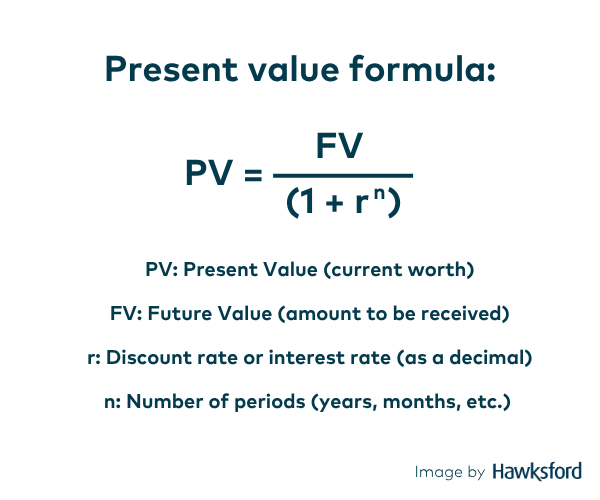
This amount is recognised as the initial lease liability and in the absence of incentives or upfront costs, will also form the initial measurement of the ROU asset.
Journal entries (double entries)
Your accounting entries will follow a structured approach over the life of the lease.
1. At lease commencement
At the start of the lease, you will record the asset and liability on your balance sheet:
- Debit (Dr) ROU asset: SG$432,948
- Credit (Cr) lease liability: SG$432,948
This reflects your right to use the leased office space and the corresponding obligation to make future lease payments.
2. End of Year 1: lease payment and interest recognition
At the end of the first year, the annual payment of SG$100,000 will be split into:
- Interest expense: SG$432,948 × 5% = SG$21,647 (rounded)
- Principal repayment: SG$78,353
The journal entry will be:
- Dr Interest expense: SG$21,647
- Dr Lease liability: SG$78,353
- Cr Bank: SG$100,000
This reflects both the financing cost associated with the lease and the reduction in the outstanding liability.
3. End of Year 1: depreciation of the ROU asset
The ROU asset will be depreciated over the lease term.
- Annual depreciation: SG$432,948 ÷ 5 years = SG$86,590 (rounded) per year
The journal entry will be:
- Dr Depreciation expense: SG$86,590
- Cr Accumulated depreciation – ROU asset: SG$86,590
How FRS 116 affects your financial statements
Once a lease falls within the scope of FRS 116, its impact typically shows up across three key areas of your financial statements.
On the statement of financial position or balance sheet, recognising ROU assets and corresponding lease liabilities will generally increase both total assets and total liabilities. On the statement of profit or loss, rental expense typically replaced by a combination of depreciation and interest expense.
The presentation of lease payments also changes on the statement of cash flows. The principal portion is typically presented under financing activities, while the interest portion is presented based on your company’s accounting policy under the applicable standards. Payments for leases where a recognition exemption is applied (for example, certain short-term or low-value asset leases) are generally presented within operating activities.
For clarity, our Singapore team can assist with recording your ROU assets and lease liabilities consistently across your financial statements in line with FRS 116. Please reach out to discuss further.
FRS 116 exemptions
While the FRS 116 standard is broad in scope, there are some exemptions available to companies. These may help reduce the administrative burden where the impact is not considered material.
Short-term leases
You may elect not to recognise a ROU asset and lease liability for a lease if, at the commencement date, the lease term is 12 months or less and the lease does not include a purchase option. If this election is applied, lease payments are recognised as an expense over the lease term. For example, where an arrangement is a lease and runs for 12 months or less, it may be eligible for this exemption, subject to the terms and conditions.
It is important to note that the lease term is not limited to the initial contract period stated upfront. It also includes the non-cancellable period, any renewal periods where you are reasonably certain to renew, and periods after termination options where you are reasonably certain not to terminate.
In Singapore, commercial leases also often include rent-free periods. These are considered part of the lease term and must be factored into your overall assessment.
Low-value asset leases
FRS 116 also allows an exemption for leases of low-value assets. These typically include laptops, phones, small office printers, and minor office equipment. Even if these items are leased for more than one year, they do not need to be capitalised.
How we can help
For many companies in Singapore, office rental agreements will often meet the definition of a lease and will therefore need to be capitalised unless they qualify for a short-term exemption. From what we see, challenges arise not from the calculations themselves but from incomplete information or last-minute assessments, particularly as FRS 116 remains a relatively new standard to some.
If you would like guidance on accounting for your leases in Singapore, please get in touch with our team. We can assist with evaluating your contracts and applying the accounting treatment required under FRS 116.
Frequently asked questions
What is FRS 116 and how does it affect lease accounting?
FRS 116 sets out how leases should be reflected in financial statements in Singapore. For lessees, it brings most leases onto the balance sheet. Instead of showing only rental expense, you will typically recognise a right-of-use (ROU) asset and a corresponding lease liability. Over time, costs are generally reflected as depreciation (for the ROU asset) and interest (on the liability), which can change your key metrics and reporting processes.
What are the differences between FRS 116 and IFRS 16?
Singapore’s accounting framework follows the international standards closely, FRS 116 is closely aligned with the International Financial Reporting Standard (IFRS) 16 (Leases), so the core concepts are very similar, especially the single lessee accounting model and the balance sheet recognition of most leases. Any differences are generally limited to local context or implementation details. If you report under both frameworks (or have group reporting requirements), we can help you map the requirements and keep your lease accounting consistent.
How do I comply with FRS 116 for commercial lease agreements?
A practical way to approach FRS 116 is to (i) identify which contracts contain a lease, (ii) confirm key terms such as lease term, payments and discount rate and (iii) decide whether any recognition exemptions apply. For leases that are recognised, you will measure the lease liability (present value of payments) and record the corresponding ROU asset. Ongoing compliance typically includes keeping lease data up to date, tracking modifications or reassessments and preparing the required disclosures.
How is a lease liability accounted for under FRS 116?
A lease liability starts with the present value of future lease payments at the commencement date. In practice, this means discounting fixed payments and certain variable payments (for example, those linked to an index or rate) using either the interest rate implicit in the lease or your incremental borrowing rate. If you would like help determining inputs and documenting key judgements, our team can support you.
How does FRS 116 impact a company's balance sheet?
FRS 116 typically increases both total assets and total liabilities because you recognise a ROU asset and a lease liability for in-scope leases. This can affect leverage rations, Earnings Before Interest, Taxes, Depreciation and Amortisation (EBITDA) and covenant metrics, so it is worth assessing the impact early, especially if you have multiple locations, vehicles or equipment leases.
Can short-term leases be exempted under FRS 116?
Yes, FRS 116 allows a practical exemption for short-term leases. If, at commencement, the lease term is 12 months or less and there is no purchase option, you can elect the exemption and recognise payments as an expense over the lease term (instead of recognising a ROU asset and lease liability). If you are unsure whether your arrangements qualify, we can help you work through the terms.
Does FRS 116 change how leases are treated for corporate income tax purposes?
FRS 116 changes how leases are reported in the financial statements, but tax treatment is governed by Singapore tax law and Inland Revenue Authority of Singapore (IRAS) guidance.
The adoption of FRS 116 may affect how amounts are computed and presented for tax purposes (for example, where accounting split costs into depreciation and interest), and there can be specific rules for different payments and arrangements (including withholding tax considerations in some cases). For clarity, refer to the latest IRAS e-Tax guidance on leases and consider professional tax advice for your circumstances.

Speak to our experts today
Get in touch to find out how our Corporate team can support you with your business needs.