For many companies, establishing an entity in a new market may seem like the most difficult part of expansion. The early focus is often on choosing an appropriate structure and completing the requirements needed to become operational. While important, these steps do not cover everything involved in maintaining a local presence.
Once operations begin, there can be additional responsibilities to manage. We discuss some of the complexities companies may face during expansion and how our team at Hawksford can assist.
International expansion challenges evolve as businesses grow
If you’re in the process of expanding your business, the areas requiring attention can change as you progress from market entry to established operations and further growth. The following table sets out the main questions and considerations we typically see across these phases:
| Expansion stage | Main question | Key considerations | What success looks like |
|---|---|---|---|
| Market entry | Can we enter and operate in this market? |
|
Operational readiness |
| Operations | Do we have the resources to maintain compliance? |
|
Sustainable operations |
|
Growth |
Can we scale without losing visibility and coordination? |
|
Scalable growth |
Stage 1: Market entry challenges
Consider a technology company preparing to enter Southeast Asia. Its immediate priorities may be incorporation and meeting the target launch date, but it must also determine whether its activities require regulatory approval and whether the proposed structure can support local hiring and ongoing compliance.
If these issues are identified too late, the business may face delays in becoming operational. Many expansion challenges therefore begin during the planning stage.
Choosing a suitable market-entry model
If you’re assessing demand in a new market, a representative office or Employer of Record (EOR) model may be sufficient, depending on the activities permitted locally. Where you plan to hire a larger local team or establish long-term operations, a subsidiary, branch or joint venture may be more appropriate, subject to local requirements and the level of control you need.
Importantly, legal and regulatory requirements vary across jurisdictions. An approach that works in one market may not be available or suitable in another. For this reason, taking time to understand the local market and regulatory environment can help you identify the structure best suited to your objectives.
Plans to establish manufacturing capability, isolate assets or create a regional hub may also bring additional considerations relating to investment, governance and risk.
Regulatory approvals and market-access barriers
A market may offer strong commercial potential, but that does not always make it easy to enter. You may need to satisfy local licensing requirements or secure approval for certain activities before operations can begin.
Foreign ownership restrictions and beneficial ownership requirements can affect how you establish a presence. Depending on the jurisdiction, businesses may also need to consider applicable anti-money laundering, customer due diligence and sanctions requirements.
Banking requirements may add further time before your business becomes fully operational. Assessing these conditions early can help you plan the setup more effectively.
Stage 2: Operational challenges
Once you have entered a market, you will need to ensure that your activities remain compliant and aligned with the wider organisation. This is often where the complexity of international expansion becomes more apparent. Incorporation may be complete, but reliable processes are still needed to fulfil ongoing obligations and maintain visibility over local operations.
Hiring, payroll and workforce management across borders
Hiring people in another jurisdiction brings additional responsibilities relating to payroll, taxation and local employment requirements. These can differ significantly between markets. Payroll cycles, statutory contributions and employment documentation may need to be managed differently, while employee transfers can create immigration or tax considerations.
Where permitted, an EOR arrangement may offer one way to hire in a jurisdiction without immediately establishing a separate local entity. However, the legal framework, permitted scope and employer obligations can differ significantly between countries. For guidance on the requirements in your target locations, please reach out to our team.
Tax administration and financial reporting
Maintaining accurate and consistent information across the organisation can become more difficult as your international operations grow. Different entities may use separate systems, reporting calendars or accounting processes, making it harder to reconcile figures and preserve a reliable group-wide view.
Local tax rules and reporting standards can add further complexity, particularly where information must pass between internal finance teams and external advisers. Clear reporting procedures and regular reviews of financial data can help you identify inconsistencies early and maintain oversight across the group.
Stage 3: Growth and scaling challenges
As the business expands, responsibilities may no longer sit within a single team or entity. Obligations must be coordinated across jurisdictions and business functions, often under different deadlines and regulatory requirements.
Managing multiple entities and operating structures
Entering additional markets may involve establishing a subsidiary, branch or other local arrangement, appointing new directors and taking on separate reporting or compliance obligations.
Individually, these requirements may appear manageable. The difficulty arises when you need to oversee them collectively. To manage this, group-level governance should provide clear standards for reporting, approvals, risk management and accountability, while making sure each entity meets its applicable local legal, regulatory and operational obligations. International service providers, such as our team at Hawksford, may also be engaged to assist with addressing recurring obligations across multiple jurisdictions.
Managing cross-border transactions and intercompany relationships
Your entities may also become more connected. Services may be shared, costs allocated or funds transferred across the group. An action taken in one jurisdiction can therefore affect several entities. Cross-border arrangements may also create additional tax, regulatory, sanctions and financial crime considerations depending on the jurisdictions, counterparties and nature of the transactions involved.
Intercompany arrangements should reflect how the business operates, while the relevant teams need access to consistent information. Finance, legal, human resources and operational teams may all need to work within a coordinated framework.
Higher transaction volumes can make differences between agreements, invoices, accounting records and actual business activity harder to identify. This makes it increasingly important to have processes that support accurate reporting and effective oversight across the group.
Why expansion challenges differ for SMEs and multinational groups
For small and medium-sized enterprises (SMEs) and scaleups, the main pressure often comes from limited internal resources. Smaller teams may need to manage market entry, local compliance and ongoing administration without dedicated expertise in each area. This can slow decision-making and draw attention away from commercial priorities.
Multinational groups tend to face a different challenge. They may have larger teams and more established systems, but they must coordinate a broader network of entities, reporting requirements and local stakeholders. Differences in processes across jurisdictions can make it harder to maintain consistency and retain a clear group-wide view.
Watch: Understanding the challenges of international expansion
Learn more about the challenges businesses may face during international expansion in this video:
- Challenges of international expansion (00:00)
- Compliance in local markets (00:06)
- Bridging cultural differences (00:40)
- Accessing foreign incentives (01:01)
- Defining a clear strategy (01:11)
- Choose Hawksford for your expansion (01:37)
How we can help businesses manage international expansion
The challenges of international expansion do not end once an entity has been established. They change as your business develops in other markets. The support you need should evolve in the same way.
To discuss how our team can assist you throughout your expansion, please get in touch. Through a combination of offices in key business locations and an extensive network of partners in established and emerging locations, our team has the local knowledge and international expertise to help you manage the complexities of cross-border growth.
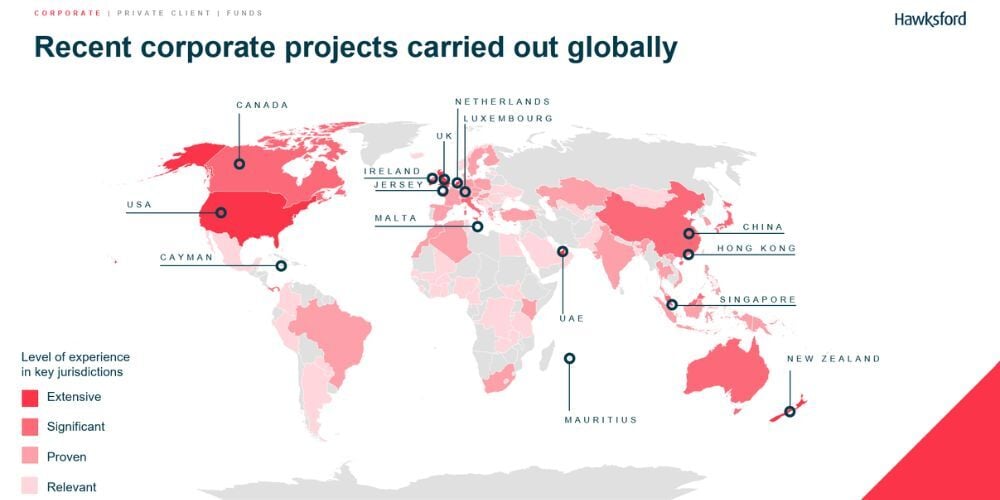
Our support can cover:
Market entry
If you have plans to set up in a new market, we can help you determine the level of local presence required based on your objectives. We can then assist with entity formation and provide guidance on the information and documentation needed for setup. Where you intend to hire locally without immediately establishing an entity, an EOR arrangement may also be considered, subject to local requirements and your longer-term plans.
Ongoing operations
Once the business is established, we can continue to support the processes needed to keep local operations running effectively. This may include coordinating bank account opening, accounting, payroll and ongoing corporate and regulatory compliance requirements, subject to the nature of the services available in the relevant jurisdiction.
We can also assist with company secretarial matters, statutory records and filings arising from changes to the business. By bringing these responsibilities into a more coordinated framework, we can help you retain visibility and reduce pressure on your internal teams.
Regional and international growth
As your business enters additional markets, the need for coordination becomes greater. Different entities may follow separate reporting timelines and governance requirements, making it harder to maintain a clear view across the organisation.
Where required, we can assist with governance and administrative requirements as your structure becomes more complex. Our international presence also enables us to deliver support across different markets, helping you manage your wider group in a more consistent way.
Frequently asked questions
Is incorporation always the best way to enter a foreign market?
Not necessarily. Setting up a local company can provide greater control and support long-term growth, but it may also create ongoing tax, reporting and administrative obligations. Where you are assessing a market, hiring a small team or conducting limited activities, an Employer of Record (EOR), branch or representative office arrangement may offer a more practical starting point. Speak with our team to explore the market-entry option that best fits your plans.
Which international expansion challenges are most underestimated?
Ongoing compliance is one of the more commonly underestimated areas of international expansion. The initial setup may be completed successfully, but regular filings, licence renewals, record keeping and internal oversight can become harder to manage as the business grows.
How should businesses prioritise international expansion risks?
If you’re preparing to enter a new market, begin with risks that could prevent or delay entry, such as ownership restrictions, licensing requirements, limits on permitted activities, beneficial ownership requirements and applicable sanctions or regulatory restrictions. You can then review matters that may affect day-to-day operations, including tax, employment and ongoing regulatory compliance. Longer-term considerations, such as governance, cross-border reporting and the ability to scale, should also be assessed before you finalise your structure.
When does international expansion typically require specialist support?
Specialist support is often useful when you are entering a market with unfamiliar legal, tax or employment requirements. It can also help where your plans involve regulated activities, immigration matters or several jurisdictions at once. Reach out to us to understand how we can support your market entry and ongoing operations.
What are the warning signs that international expansion is becoming difficult to manage?
One of the clearest signs is that compliance becomes reactive rather than planned. Your teams may begin responding to missed deadlines, incomplete records or unexpected regulatory requests instead of following a clear process. Limited visibility across jurisdictions and repeated changes to local arrangements can also indicate that your expansion model needs to be reviewed.
Contact us for support in understanding and managing the obligations you need to meet across your markets

Speak to our experts today
Get in touch to find out how our Corporate team can support you with your business needs.